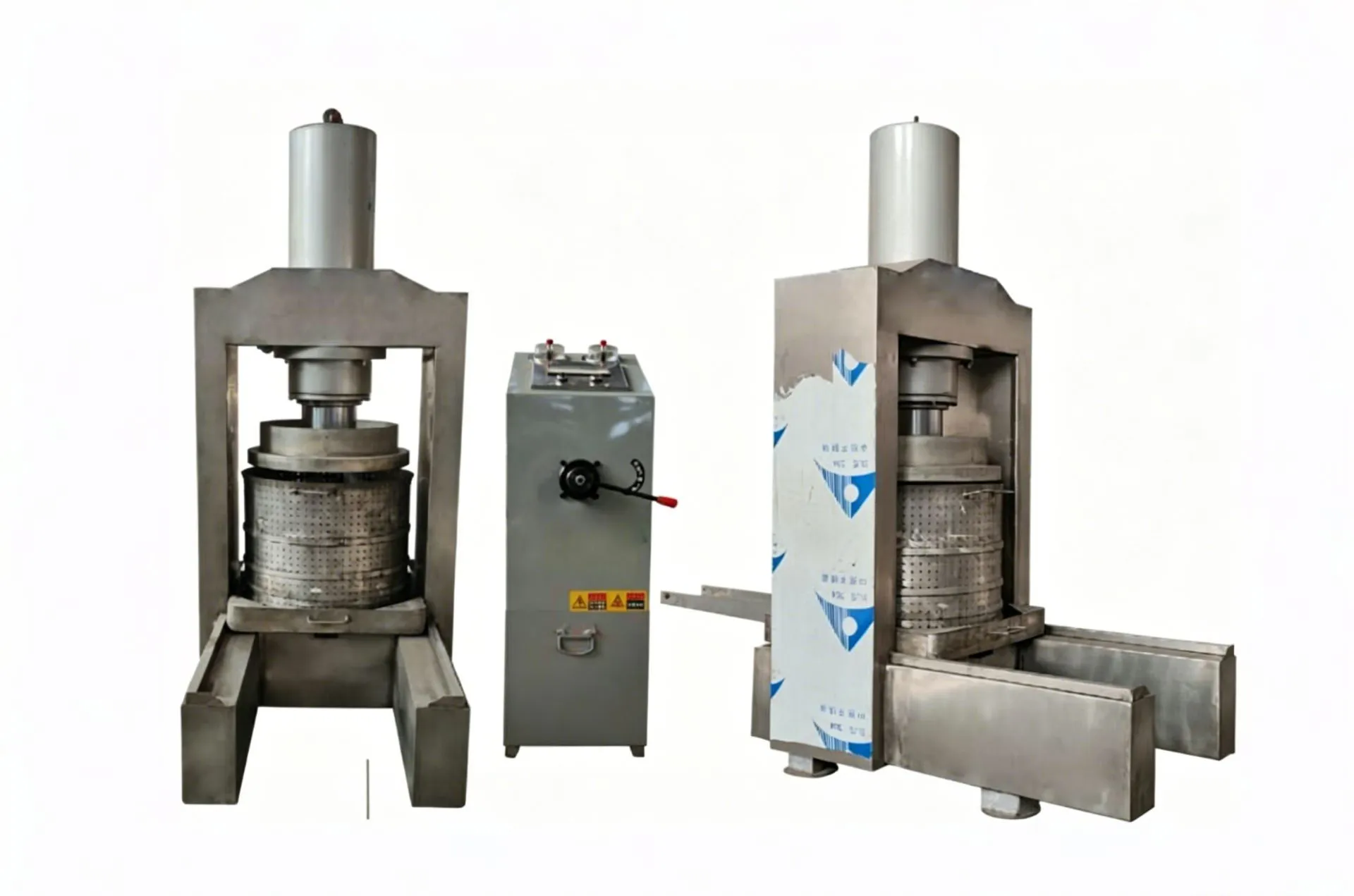
Coconut Oil Press Machine (300 Type)
The 300-type special customized coconut press. Barrel and oil tray are 304 food-grade stainless steel. Entire machine and pressing head wrapped in 304 stainless steel to prevent corrosion from acidic coconut juice.
Virgin coconut oil (VCO), coconut milk, and fruit/vegetable juice — multi-purpose on one machine. Ships regularly to Philippines, Indonesia, Thailand, and Sri Lanka.
- 304 food-grade stainless steel barrel and oil tray
- Full machine wrapped in stainless steel — no corrosion
- VCO and coconut milk on the same machine
- 300 tons pressing force, 60 Mpa system pressure
- 600mm ID barrel, 60-65% oil yield from copra
- Also works for fruit/vegetable juice and dehydration
- Ships to Philippines, Indonesia, Thailand, Sri Lanka
Two Products, One Machine
Virgin Coconut Oil (VCO)
Extract fresh coconut meat. Press at room temperature. The result is pure, clear VCO that retains medium-chain triglycerides (MCTs), lauric acid, and natural antioxidants — what health food buyers pay premium for. 60-65% oil yield from dried copra. No chemical solvents, no high-heat refining. Just mechanical pressing.
Cold Press PremiumCoconut Milk & Water
Same machine. Different process. Load grated coconut. Press. Out comes rich coconut milk. Second pressing extracts coconut water. Both are staple ingredients across Southeast Asian and African kitchens.
Dual PurposeTechnical Specifications
| Model | 300 Type Coconut Press (Customized) |
| Pressing Force | 300 Tons |
| System Pressure | 60 Mpa |
| Cake Surface Pressure | 10.83 Mpa/cm² |
| Barrel | 600mm ID × 600mm H — 304 Food-Grade SS |
| Cylinder | 300mm OD / 240mm ID / 700mm Stroke |
| Motor Power | 2.2 KW |
| Machine Weight | ~1.3 Tons |
| Overall Dimensions | 2100×1260×2200 mm |
| Applications | Coconut juice/milk, VCO, fruit/vegetable juice, dehydration, oil sludge |
| Markets | Philippines, Indonesia, Thailand, Sri Lanka, Hainan (China), Southeast Asia |
VCO vs RBD Coconut Oil — Quick Reference
Two different products from the same raw material. Understanding the difference helps you decide which market to target — or whether to produce both on one press.
| Characteristic | Virgin Coconut Oil (VCO) | RBD Coconut Oil |
|---|---|---|
| Process | Cold press or fermentation, no refining | Expeller pressed + refined (bleached, deodorized) |
| Appearance | Clear to slightly cloudy white | Pure white, clear and sediment-free when liquid |
| Aroma / Taste | Mild fresh coconut scent | Neutral — no smell or taste |
| MCT & Lauric Acid | Preserved at natural levels (~50% lauric) | Largely retained through physical refining |
| Free Fatty Acid (FFA) | ≤ 0.5% | < 0.1% after refining |
| Typical Price | USD 2.50-6.00 / kg (retail higher) | USD 1.00-2.00 / kg bulk commodity |
| Key Markets | Health food, supplements, cosmetics | Food processing, baking, frying, industrial |
A real Philippines scenario:A Davao-based operator runs a VCO operation on our 300-type coconut press. He sources mature coconuts from local farmers at roughly PHP 15-18 per nut, extracts about 200-250ml of VCO per piece, and bottles under his own brand for Manila health shops at PHP 450-600 per 500ml bottle. His monthly output of roughly 400 liters generates enough margin that he is planning a second machine this year. The same equipment can also process dried copra for bulk RBD if he wants to serve both markets simultaneously.
FAQ
Why stainless steel for coconut?
Coconut is acidic. Regular carbon steel rusts and contaminates the oil within weeks. Our 304 food-grade stainless steel barrel, oil tray, and outer body eliminate this problem entirely. The machine stays clean, your oil stays pure.
Can I make both VCO and coconut milk?
Yes. Same machine. The process changes: for VCO, press dried copra. For coconut milk, press fresh grated coconut meat. You can switch between products batch by batch.
What's the oil yield?
60-65% from dried copra. From fresh coconut meat, you're extracting milk, not oil — yield depends on coconut water content and pressing technique.
Do you ship to the Philippines?
Yes. Regular shipments to Manila port. Sea freight typically 15-22 days. We handle all export documents.
VCO quality standards — what do APCC and export buyers check?
Export buyers and the Asian Pacific Coconut Coalition (APCC) look at several key markers: free fatty acid content should be 0.5% or lower for premium VCO (some buyers want under 0.3%), peroxide value below 5 meq/kg indicates freshness, moisture should stay under 0.1%, and the oil must be clear with no visible sediment. For organic or Kosher certification, you will need additional documentation on sourcing and processing chain of custody.
Copra preparation: how dry should it be before pressing?
Dried copra for pressing should reach below 6-7% moisture content. If you are drying in the sun, spread the halved coconuts on a rack for 4-7 days depending on humidity. Over-dried copra (below 4%) presses fine but yields slightly less because some oil gets bound to overly dry fiber. Under-dried copra above 9% moisture can cause mold during storage and produces cloudy oil that takes longer to settle.