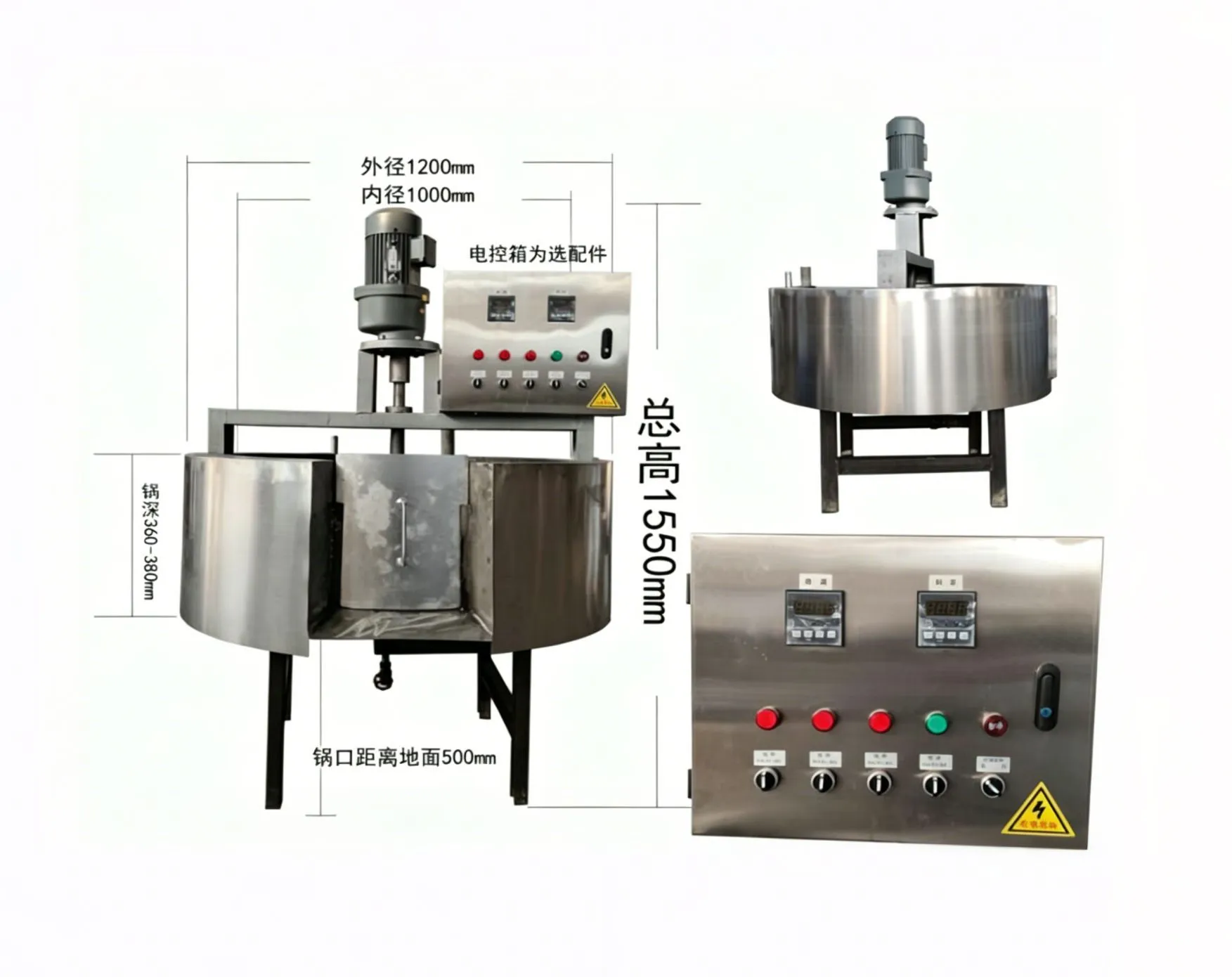
27KW Thermal Oil Flat-Bottom Electric Roaster
Features a double-walled reinforced base with integrated motor and reducer. The pot body exterior is lined with rock wool insulation for better energy efficiency. The outer shell is wrapped in stainless steel for an attractive appearance.
Thermal oil electric heating provides more uniform heating with slower cooling for greater energy savings compared to direct heating methods.
- Double-layer reinforced pot bottom — durable construction
- Integrated gear-motor — smooth, reliable rotation
- Rock wool insulation + stainless steel outer shell
- Thermal oil circulation — truly uniform heating, no hot spots
- 1000 mm inner diameter pot — large batch capacity
- 100–150 kg per batch
- Optional electric control box with alarm functions
- Auto heat/rotation start-stop from control panel
Specifications
| Parameter | Value |
|---|---|
| Total Roaster Height | 1550 mm |
| Pot Outer Diameter | 1200 mm |
| Pot Inner Diameter | 1000 mm |
| Pot Depth | 380 mm |
| Discharge Outlet Width | 260 mm |
| Discharge Height from Ground | 500 mm |
| Processing Capacity | 100–150 kg |
| Reducer Power | 1.1 KW |
| Heating Power | 27 KW |
| Total Power | 27 KW + 1.1 KW |
| Dimensions | 1550×1200 mm |
All specifications from official factory catalog. Custom sizes available for different batch requirements.
Roasting Temperature & Time Guide by Seed Type
Different seeds require different roasting profiles. Here's what we've learned from our customers' actual operations across 50+ installations:
| Seed Type | Temperature Range | Roasting Time | Signs of Doneness | Notes |
|---|---|---|---|---|
| Sesame (white) | 170–190°C | 15–20 min | Even golden color, popping sound | Don't over-roast — bitter oil |
| Sesame (black) | 180–200°C | 18–22 min | Crack audible, aroma released | Slightly higher temp than white |
| Groundnut / Peanut | 160–180°C | 20–25 min | Shell loosens, nut meat golden | Uniform size = even roast |
| Rapeseed / Canola | 140–160°C | 15–18 min | Seed darkens slightly, aroma | Lower temp — burns easily |
| Mustard Seed | 150–170°C | 12–15 min | Popping begins, pungent smell | Short roast for kachi ghani prep |
| Tea Seed (camellia) | 180–200°C | 20–25 min | Shell cracks easily, fragrant | Post-frost harvest = higher oil |
| Copra (dried coconut) | 100–120°C | 30–40 min | Even light brown, coconut aroma | Much lower temp than oilseeds! |
| Sunflower Seed | 150–170°C | 15–20 min | Even light brown color | Watch for scorching edges |
* Temperatures measured at pot surface. Actual core temperature varies by batch size. Based on customer feedback across 50+ installations worldwide.
Why Thermal Oil Heating? (vs Direct Fire or Electric Coil)
Heating method has a significant impact on oil quality. Our roaster uses a thermal oil circulation system — heated oil flows through channels embedded in a double-layer pot bottom, transferring heat evenly across the entire surface. The practical difference versus direct-fire or exposed-coil designs is significant:
Temperature Uniformity
Thermal oil maintains ±5°C variation across the pot surface. Direct-fire roasters commonly show ±30°C hot spots that scorch some seeds while leaving others underdone. Uniform heat = consistent oil yield and flavor.
Energy Efficiency
The rock wool insulation layer between the pot body and outer shell reduces radiant heat loss by an estimated 30–40% compared to uninsulated designs. That's real money saved on every shift, especially in markets with expensive electricity.
Oil Quality Impact
Precise temperature control matters because overheating seeds degrades natural antioxidants and creates bitter compounds in the final oil. Thermal oil's stable heat profile helps you hit the sweet spot every batch.
Operation Tips from Real Operators
I over-roasted my seeds. Now what?
Don't press it yet. Over-roasted seeds produce dark, bitter oil with reduced market value. Options: blend with a fresh batch at 1:3 ratio to dilute (works for internal consumption), or sell as animal feed and start fresh. Prevention is easier: set your alarm 2 minutes below expected doneness time and check visually. Most experienced operators can tell by smell when a batch is 30 seconds from done.
The temperature isn't rising as fast as it should. What's wrong?
Most common cause: loading cold, damp seed into a warm pot drops the temperature sharply. Pre-warm the pot empty for 5 minutes before loading. If the issue persists, check if the thermal oil level in the heating loop is correct (visible through the sight glass on most units). Low oil means poor heat transfer. Also verify your voltage supply matches the 27KW rating — undervoltage from long cable runs or shared circuits is a frequent culprit in rural installations.
My batches are coming out unevenly roasted. What should I adjust?
Two things to check: first, batch size. Loading more than 120 kg into this pot creates a deep seed bed where the bottom layer roasts faster than the top. Stick to 80–110 kg per batch for best results. Second, stirring frequency. The built-in scraper arm rotates continuously but dense seeds like groundnuts can still form clumps. Stop the rotation once mid-cycle, manually stir with a paddle, then resume. Takes 30 seconds and makes a visible difference in evenness.
Frequently Asked Questions — Seed Roaster
Can this roaster handle copra (dried coconut meat)?
Yes — but use much lower temperatures (100–120°C) and longer times (30–40 min). Copra burns easily and burned coconut oil has very limited market value. Many VCO producers in the Philippines use exactly this model for pre-heating copra before pressing.
How many batches per day can I run?
Assuming 18-minute average cycle (including load, roast, discharge): roughly 60–70 batches per day for a single-shift operation. At 100 kg average batch weight, that's 6–7 tonnes of roasted seed daily. Two shifts double that output.
Does it work on single-phase power?
No — the 27KW heater requires three-phase 380V supply. For areas without three-phase grid access, consider our wood-fired roaster as an alternative, or install a phase converter (we can advise on sizing).
What maintenance does it need?
Routine: check thermal oil level weekly via sight glass, clean the scraper arms after each day's run, inspect the insulation layer annually for gaps or settling. The motor-reducer unit needs oil change every 12 months of continuous use. Heating elements last 3–5 years depending on duty cycle — keep one spare on hand if you're running two shifts.