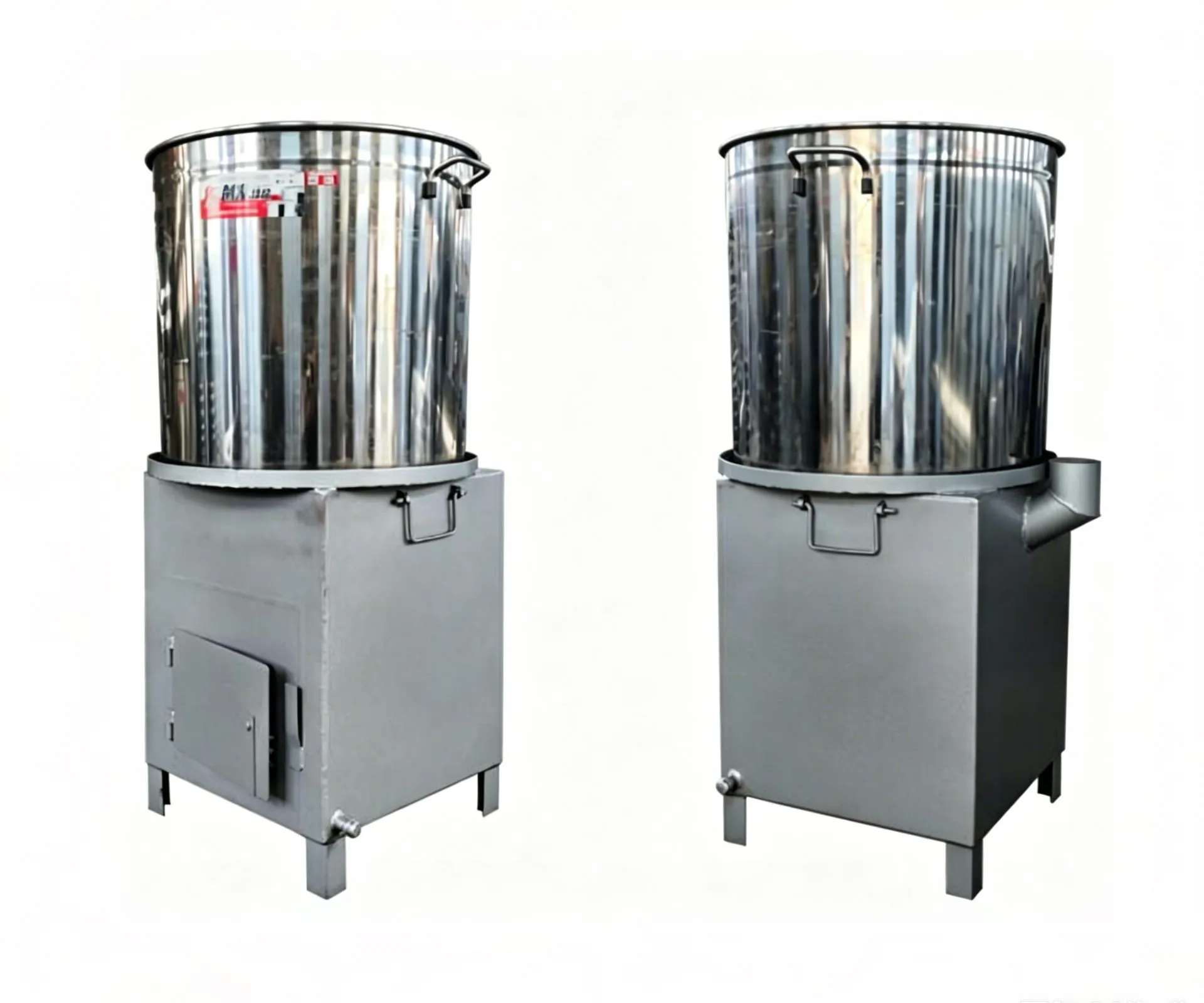
Wood-Fired Steamer (60 Type)
The stove body is constructed from Q355B carbon steel and can use different fuels for heating — coal, wood, or gas depending on what's available locally. The stove interior features heat-collecting channels that increase the heating surface area and save fuel.
An integrated water tank is positioned with a drain outlet at the bottom near the stove body. The pot body is made of 304 stainless steel with mirror finish for food safety.
- Multi-fuel capability: coal, wood, gas — use whatever is locally available
- Heat-collecting channel design — larger heating area, fuel-efficient
- Q355B carbon steel stove body — built tough
- 304 stainless steel (mirror finish) pot body — food safe
- ~100 kg per batch
- Integrated water tank with bottom drain outlet
- No electricity needed — ideal for remote locations
- Total weight only 78 kg — portable installation
Specifications
| Parameter | Value |
|---|---|
| Stove Body Material | Q355B Carbon Steel |
| Pot Body Material | 304 Stainless Steel (Mirror Finish) |
| Pot Dimensions | φ600×610 mm |
| Stove Dimensions | 500×500×750 mm |
| Fuel Types | Coal, Wood, Gas |
| Pot Capacity | ~100 kg |
| Chimney Outer Diameter | 8.7 cm |
| Total Weight | 78 kg |
Electric vs Wood-Fired: Which One?
Electric Seed Steamer Machine (27KW)
Better for: consistent production, labor savings, precise temperature control, indoor operation.
Higher upfront cost but lower long-term operating cost.
Wood-Fired Steamer (60T)
Better for: areas with unreliable/no electricity, low-budget setups, outdoor operation.
Lower upfront cost, flexible fuel options.
How the Wood-Fired Seed Steamer Works
The wood fired steamer (60 Type) operates on a time-tested combustion heating principle, making it ideal for locations where electricity is unreliable, expensive, or unavailable. Fuel — coal, wood, or gas — is burned in the Q355B carbon steel firebox beneath the 304 stainless steel cooking pot. The firebox features specially engineered heat-collecting channels that increase the total heating surface area, directing more heat into the pot and reducing fuel consumption by an estimated 20-30% compared to flat-bottomed traditional stove designs. Water in the integrated tank beneath and around the pot boils as the firebox heats it, generating steam that rises through the seed mass in the 600×610 mm stainless steel pot. A bottom drain outlet allows easy water drainage and cleaning after each production run.
This multi-fuel steamer processes approximately 100 kg of oil seeds per batch — the same batch capacity as the electric model but without any electrical connection. For rural sesame mills in Ethiopia with no grid power, groundnut processors in remote Nigerian villages, or startup mustard oil operations in off-grid Indian districts, the wood-fired design eliminates dependence on unreliable electricity while still delivering the steaming quality essential for high oil yield. The mirror-polished 304 stainless steel pot ensures food-grade hygiene — no rust, no chemical leaching — even under high-temperature, high-moisture conditions. Total weight is only 78 kg, making the wood fired steamer transportable and installable without heavy equipment. A chimney (outer diameter 8.7 cm) vents smoke safely away from the workspace, and integrated heat channels distribute warmth evenly under the pot to prevent hot spots that could scorch seeds in one area while leaving them under-steamed in another.
Application Scenarios & Use Cases
Off-Grid Oil Mills (Rural Africa, Remote India)
The multi-fuel steamer is the go-to solution for mills without reliable grid power. Ethiopian sesame processors and Nigerian groundnut millers operate entirely on locally gathered firewood or charcoal, achieving the same steaming quality as electric units with zero electricity cost.
Low-Budget Startup Operations (Southeast Asia)
Startup oil mills in Myanmar, Cambodia, and rural Indonesia choose the wood fired steamer for its low upfront cost. A single unit serves a press line processing 300-500 kg/day, with fuel sourced from agricultural waste — rice husks, coconut shells, or palm kernel shells.
Outdoor or Semi-Outdoor Installations
The chimney-vented design allows wood fired steamer operation in semi-covered outdoor areas where electric steamers would be impractical or unsafe. Mills in tropical climates with open-sided workshop structures benefit from this flexibility.
Backup Steaming Capacity
Larger mills with electric steamers often keep a wood-fired unit as backup for power outages. When grid supply fails during peak harvest season, production continues uninterrupted — a critical insurance policy for seasonal operations.
Operation Tips & Best Practices
- Fuel preparation: Use dry, seasoned firewood or charcoal for clean combustion. Wet or green wood produces excessive smoke, reduces heat output, and deposits soot on the pot exterior. For consistent results, pre-cut wood into uniform pieces (approximately 5-8 cm diameter).
- Firebox startup: Start with a small, hot fire using kindling for 10-15 minutes to gradually warm the firebox and pot. Adding full fuel too early creates thermal shock that can warp the pot base over repeated cycles.
- Airflow management: Adjust the firebox air intake to control burn rate and steam intensity. Open for rapid boiling; partially close for steady simmering. The heat-collecting channels work best with a medium, sustained burn rather than intense short bursts.
- Water level vigilance: Check the integrated water tank level every 30-40 minutes during operation. The tank holds enough for approximately 2-3 batches, but dry-boiling damages the pot. Add water gradually to avoid temperature shock.
- Batch rotation: For continuous operation, have the next batch of seeds pre-loaded in a spare container near the steamer. Stagger loading and unloading to maintain warm pot temperature between batches for fuel efficiency.
- Ash removal: Clear ash from the firebox daily. Ash buildup insulates the fire from the pot, reducing heating efficiency and increasing fuel consumption. Use the ash for soil amendment if your mill has adjacent farmland.
- Pot maintenance: Wipe the pot interior after each production day while still warm. The mirror-polished 304 stainless steel resists sticking, but prompt cleaning prevents any residual seed material from carbonizing and affecting the next batch's flavor.
Frequently Asked Questions
What fuels can I use?
Coal, firewood, charcoal, or gas. Agricultural waste — coconut shells, palm kernel shells, rice husks — also works. Use the most economical fuel available locally.
What is the batch capacity?
~100 kg per batch in the 600×610 mm pot. Typical daily output: 400-600 kg with 4-6 batches. Similar capacity to the electric model.
Do I need electricity?
No. Completely fuel-operated — coal, wood, or gas. Ideal for off-grid locations, unreliable power areas, or mills wanting zero electricity consumption for steaming.
What is the price and delivery?
Contact HaoNuo Machinery via WhatsApp for current pricing. Lead time: 7-15 working days. Shipping: 15-35 days to major ports. Generally more affordable than the electric version.
Is maintenance complicated?
Very simple — daily ash removal, weekly chimney check, periodic pot cleaning. No electrical parts to fail. No heating elements to replace. Lower long-term maintenance than electric.
Can it be used indoors?
Yes, with proper chimney installation (8.7 cm OD chimney included). Best in semi-covered or well-ventilated spaces. Many customers use open-sided shed structures.
Selection Guide: Which Steamer Is Right for You?
Choose the Wood-Fired Steamer if...
- Your location has unreliable or no grid electricity
- Fuel (wood, coal, agricultural waste) is abundant and cheap
- You prefer lower upfront equipment cost
- Your workshop is semi-outdoor or open-sided
- You want zero electricity operating cost
- You need a backup steamer for power outage scenarios
Choose the Electric Steamer if...
- You have stable 380V 3-phase power
- You need precise temperature/power control (3 levels)
- Indoor, enclosed workshop operation is required
- Smoke-free, ash-free operation is essential
- You prefer push-button simplicity over manual fire management
- Dual-tank automatic water refill is important to your workflow