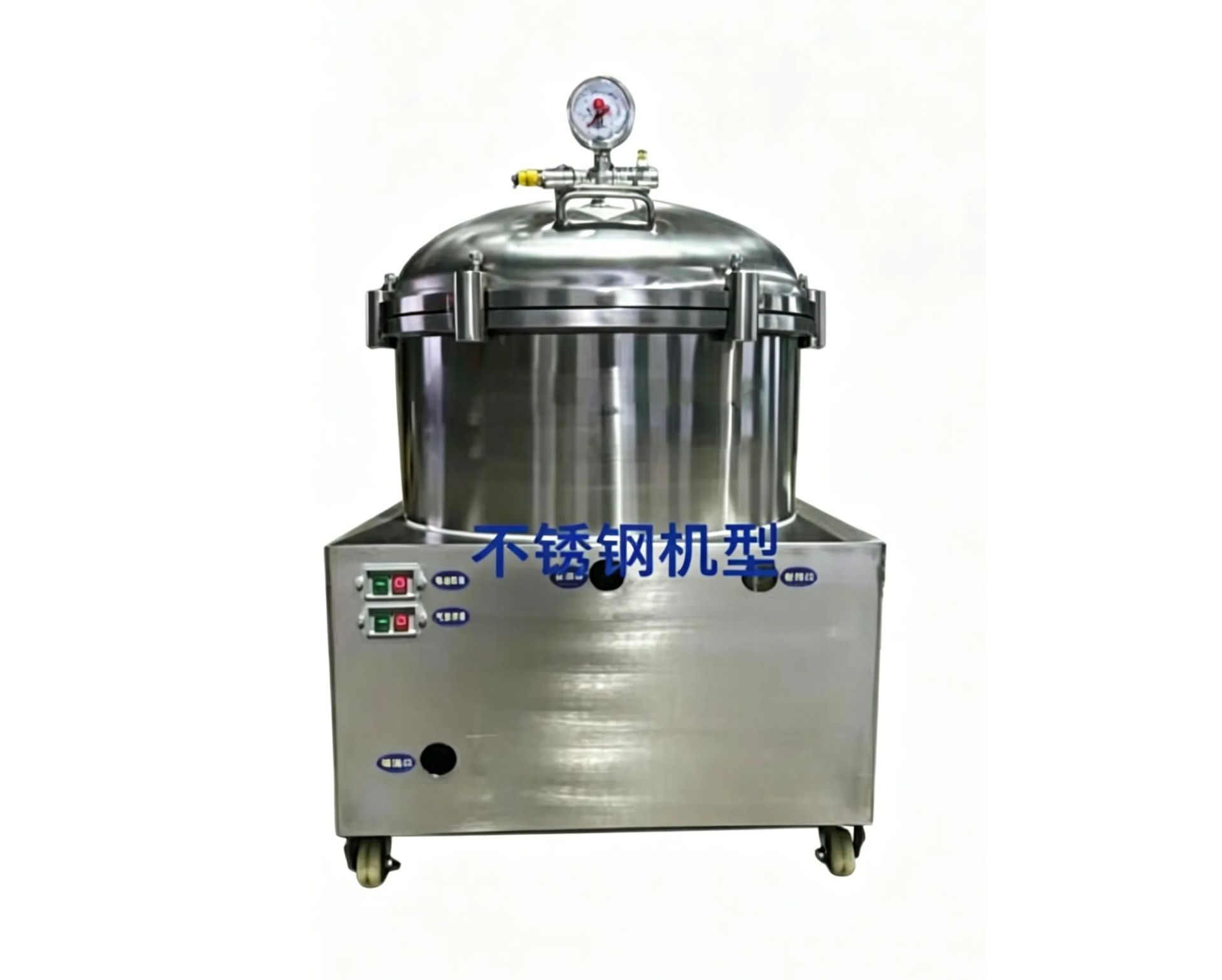
HN-10SL Multi-Layer Pneumatic Filter Press
The entire machine is made of 304L food-grade stainless steel with strong acid and alkali resistance. Higher-performance materials such as 316L stainless steel are available upon customer request.
The filtration section consists of 20 filter plates, featuring large filtration area, low liquid loss, and excellent filtration quality. Can operate 24 hours with automatic constant pressure continuous operation.
- 304L food-grade stainless steel (316L optional)
- 20 filter plates — 10 m² filtration area
- 0.2-0.3 Mpa rated working pressure — fully automatic constant pressure
- 15-170 ℃ temperature range — hot or cold filtration
- Filter paper media — no consumables needed, reusable cloth available
- Automatic oil suction + auto filtration + pressure-controlled auto-stop
- 24-hour continuous operation capability
- 1.1-2.2 KW motor, 220V or 380V compatible
- Suitable for: edible oil, industrial oil, water treatment, biopharmaceuticals
Specifications
| Parameter | Value |
|---|---|
| Rated Working Pressure | 0.2-0.3 Mpa |
| Material | 304 Stainless Steel (316L optional) |
| Filtration Area | 10 m² |
| Filter Plate Layers | 20 Layers |
| Filter Media Material | Filter Paper |
| Filtration Temperature | 15-170 ℃ |
| Machine Power | 1.1-2.2 KW |
| Working Voltage | 220V / 380V |
304L standard. 316L available for high-acid or corrosive oil applications at additional cost.
Filtration Media & Precision Guide
The HN-10SL filter press supports different filter media depending on your target clarity level and oil type. Here's how the options compare:
| Filter Media | Particle Retention | Best For | Reusability | Cost Level |
|---|---|---|---|---|
| Filter Paper (standard) | 5–25 microns | General crude oil clarification, first-pass filtration | Single use (dispose) | $ — lowest |
| Filter Cloth (cotton/polyester) | 10–50 microns | High-volume operations, repeated cycles | 50–100 wash cycles | $$ — moderate |
| Stainless Steel Mesh | 25–100 microns | Rough filtering, high-temp applications | Semi-permanent (years) | $$$ — higher upfront |
Oil Type Filtration Guide
Different oils present different filtration challenges. Based on our customers' experience across edible oil production:
Crude Oil (First Pass)
Right after pressing, oil contains suspended solids (seed particles, cake fines). Use filter paper for the first pass to catch coarse sediment. Goal: remove visible particles down to ~25 microns. This is about clarity, not refinement — you're not removing dissolved impurities at this stage.
Sesame Oil
Sesame oil naturally carries protein precipitates that settle as a cloudy sediment during storage. Filter through filter paper or fine-mesh cloth to produce the clear, bright appearance that consumers expect. Some premium sesame oil producers run a second pass through finer media for extra-clarity "gold label" product.
Peanut / Groundnut Oil
Groundnut oil contains phospholipids that can cause foaming and haze. The filter press removes solid particulates; phospholipid removal needs a separate degumming step if you're producing refined oil. For cold-pressed artisanal peanut oil, single-pass cloth filtration is usually sufficient for market-ready clarity.
VCO / Coconut Oil
Virgin coconut oil demands high visual purity because cloudiness is perceived as quality defect by consumers. VCO producers often use double-filtration: coarse pass (cloth) to remove protein solids, then fine pass (filter paper) for crystal-clear output. The 15–170°C temperature range means you can filter hot-pressed coconut oil directly without cooling.
Tea Seed / Camellia Oil
Cosmetic-grade camellia oil requires particulate-free clarity. The 304L/316L stainless construction prevents metal contamination — important when your end product sells into Japanese and European cosmetic markets at premium prices.
Industrial / Non-edible Oils
The same machine handles lubricating oil reclamation, biodiesel pre-filtration, and water treatment applications. 316L stainless recommended for industrial fluids with chemical additives that may attack 304-grade steel over time.
How the Automatic Filtration Cycle Works
This isn't a manual pump-and-wait machine. The HN-10SL runs an automated four-stage cycle:
Stage 1: Auto Oil Suction
The built-in suction pump draws unfiltered oil from your settling tank or press outlet into the filter chamber. No manual pouring needed — connect a hose from your source vessel and the machine handles the rest.
Stage 2: Constant Pressure Filtration
Once the chamber is full, pneumatic pressure builds to your set point (0.2–0.3 Mpa adjustable). Oil is forced through the 20-layer filter plate stack. The automatic system maintains constant pressure throughout the cycle even as filter loading increases and flow resistance rises.
Stage 3: Pressure-Controlled Auto-Stop
When pressure exceeds the threshold (indicating the filter media is fully loaded with trapped solids), the system automatically stops the feed pump, holds pressure briefly for final drainage, then releases. No guesswork, no over-pressing risk.
Stage 4: Cake Discharge & Reset
Open the plate stack, remove the filter cakes (the compressed solid residue), replace or clean the filter media if needed, close up, and the machine is ready for the next cycle. Full cake discharge takes about 5–10 minutes depending on operator experience.
Filter Cloth Replacement & Cost
If you choose reusable filter cloth instead of disposable paper, here's what to expect: a standard cloth set (20 pieces matching the 20 plate layers) costs roughly $80–150 USD depending on material (cotton is cheapest, polyester lasts longer). Each cloth withstands approximately 50–100 filtration cycles before the pore structure degrades enough to affect clarity. At typical small-mill throughput (2–3 filter cycles per day), that's 1–2 months of service life per cloth set. Many operators buy two sets and rotate — one in use, one being washed and dried.
Frequently Asked Questions — Filter Press
How much oil can it filter per hour?
Filtration speed depends on oil viscosity and solid content. For typical crude vegetable oil with moderate sediment: expect 40–80 liters per hour of clarified oil output. Lighter oils like sesame filter faster than heavy oils like unrefined castor. The 10 m² area means each cycle processes roughly 15–25 L before the filter loads up and needs changing.
Can I filter hot oil directly from the press?
Yes — the rated temperature range of 15–170°C covers all normal hot-pressing output temperatures. In fact, filtering while warm improves flow rate (lower viscosity) and reduces wax crystallization issues that can clog filters on some oils. Just make sure your inlet hose is rated for the temperature.
Does this replace the need for a refinery?
It replaces mechanical solid removal. It does NOT remove dissolved impurities (free fatty acids, phospholipids, pigments, waxes) — those require refining equipment (degumming, neutralization, bleaching, deodorizing). For cold-pressed artisanal oil where you want to retain natural compounds, filter press alone is usually sufficient for market-ready product. For refined cooking oil standards, this is a pre-refining clarification step.
What's included in the delivery package?
Complete unit with filter plates installed, one set of filter paper starter pack, pneumatic control panel, suction pump with hose connections, pressure gauge, and operation manual. Spare seals, gaskets, and one extra set of filter cloths are available as optional add-ons — we recommend ordering spares with the machine to avoid shipping delays later.