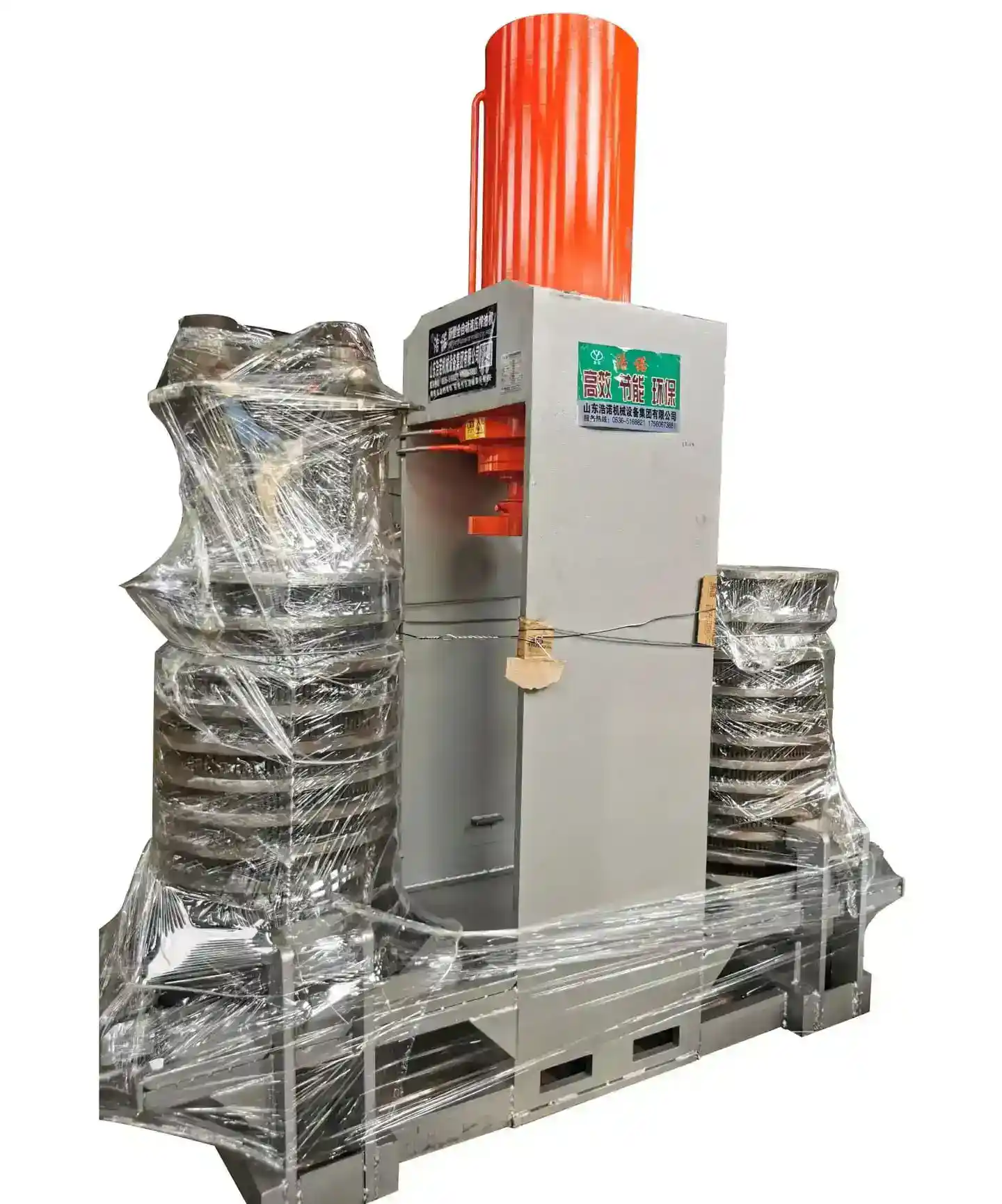
Groundnut Oil Extraction Machine
Groundnut — that's what they call it in Nigeria, Ghana, and across West Africa. Same nut, same oil, same machine. 40-45% yield. Hot press for the rich flavor your customers expect.
The leftover cake sells as animal feed — that's extra income every month. HN355, HN426, and HN480 models available. Ships to Lagos, Accra, Dakar, and Mombasa.
- 40-45% oil yield from groundnuts/peanuts
- Leftover cake sells as animal feed — extra revenue
- HN355 (360T), HN426 (500T), HN480 (600T) models
- Hot press for rich, aromatic oil
- Shell, grind, roast, press — complete process
- Ships to Nigeria, Ghana, Senegal, Kenya
- Sea freight 25-40 days with full export docs
Production Process
Shell & Sort
Kano groundnuts have 45-50% oil content. Remove shells, sort bad nuts.
Grind
Grind into paste. More surface area = more oil when you press.
Roast
27KW roaster with warm water. Brings out groundnut flavor and oil mobility.
Press & Filter
360-600 tons. Oil flows. Filter through HN-10SL. Bottle it.
Recommended Models
| Model | Force | Motor | Daily Seeds | Yield | Best If You're... |
|---|---|---|---|---|---|
| HN355 | 360 T | 3 KW | 100-355 kg | 43-45% | Starting out, village production |
| HN426 | 500 T | 4 KW | 200-426 kg | 44-45% | Growing, supplying your city |
| HN480 | 600 T | 4 KW | 300-500 kg | 45-46% | Scaling up, multiple markets |
Real Stories
Nigeria Customer Story
A groundnut oil trader in Kano's Sabon Gari market was buying refined oil from Lagos distributors at NGN 1,800 per liter and reselling at NGN 2,200 — a thin margin that barely covered transport. He installed an HN426 in late 2024. His production cost dropped to around NGN 900 per liter (seeds + electricity + labor). Selling at the same market price of NGN 2,200, his margin per liter more than doubled. He recovered the full equipment investment in roughly 7 months. Now his mill processes about 400 kg of groundnuts daily, supplying 15-20 retailers across Kano who previously bought imported oil.
The Cake Bonus
After pressing, you have groundnut cake — not waste. Poultry farmers in northern Nigeria pay NGN 150,000-180,000 per ton for quality groundnut cake (prices shift with season and feed demand). For a mill processing 500 kg of seeds daily, that's roughly 300 kg of cake — worth about NGN 45,000-54,000 each day in extra revenue. That alone covers most of your monthly operating costs. Don't throw it away.
Best Practices for Groundnut Oil Extraction
Getting the highest yield from your groundnuts starts before they reach the press. Sort and select only mature, fully dried nuts — moisture above 8% will trap oil in the cake and lower your extraction rate. Shell before grinding, as shells absorb oil during pressing and add bulk that reduces barrel capacity. Grind into a uniform paste using an oil seed crusher: the finer the paste, the more oil released under hydraulic pressure. For hot press, roast the groundnut paste at 160-180°C in a thermal oil roaster for 20-25 minutes until golden brown and aromatic — this develops the rich groundnut flavor and thins the oil for better flow. Over-roasting burns the paste and darkens the oil, reducing market appeal. After pressing, let the oil settle for 24 hours before filtering through a pneumatic filter press for crystal-clear final product. The cake should come out dry and brittle — if it's moist, adjust your roasting time or increase pressing pressure.
Groundnut Oil Business in Africa
Nigeria: The Largest Market
Nigeria produces over 3 million metric tons of groundnuts annually, yet imports roughly USD 400 million in vegetable oil each year. Local groundnut oil production is a direct substitute for imported palm olein and soybean oil. In Kano, Kaduna, and Bauchi states, groundnut oil sells at a premium over imported alternatives because consumers prefer the familiar taste. An HN426 processing 400 kg of seeds per day can produce roughly 180 liters of oil — enough to supply 15-20 local retailers. The key is consistency: Nigerian buyers judge oil by color and aroma, so standardize your roasting process.
Beyond Nigeria: Ghana, Senegal, and East Africa
Ghana's groundnut belt across the northern regions supplies both the Accra market and export channels to Burkina Faso. Senegalese groundnut oil is a staple cooking medium, and the government has periodically supported domestic pressing to reduce reliance on imported refined oils. In East Africa, groundnut paste (not oil) is the primary product in Uganda and western Kenya, but oil demand is growing in Nairobi and Dar es Salaam as urban consumers shift toward bottled cooking oils. We ship regularly to Lagos (Apapa), Accra (Tema), and Dakar — typically 25-40 days door-to-port with full documentation.
Equipment Selection Guide
Choosing the right equipment depends on your daily seed volume and target market. Here's what a complete groundnut oil production setup looks like:
- Sheller: A mechanical groundnut sheller handles 500-1000 kg/hour and pays for itself in labor savings within months. Shelled nuts press more efficiently and produce cleaner oil.
- Crusher/Grinder (220 type, 11KW): Grinds shelled groundnuts into a uniform paste. More surface area means better oil release during pressing.
- Roaster (27KW thermal oil): Even heat distribution, 100–150 kg per batch. Temperature control is critical — too hot burns the paste, too cool leaves oil in the cake.
- Hydraulic Press (HN355, HN426, or HN480): 360-600 tons of force. Choose based on daily volume: HN355 for village-scale (100-355 kg/day), HN426 for city supply (200-426 kg/day), HN480 for regional distribution (300-500 kg/day).
- Filter Press (HN-10SL): Removes suspended solids. Essential for bottled retail oil. Pair with a settling tank for best results.
FAQ
Is groundnut the same as peanut?
Yes. Exactly the same nut (Arachis hypogaea). In West Africa and India, people say "groundnut." In America and Europe, "peanut." Same machine works for both. We built this page for the "groundnut oil machine" searches coming from Lagos, Accra, and across Africa.
How much oil from 100 kg of groundnuts?
About 40-45 liters, depending on nut quality and whether you use hot or cold press. The remaining 55-60 kg becomes groundnut cake — sell it as animal feed, don't throw it away.
Can you ship to Nigeria / Ghana / Senegal?
Yes. Regular shipments to Lagos (Apapa port), Accra (Tema port), and Dakar. FOB or CIF — whatever you prefer. Sea freight takes 25-40 days. We handle all export documentation.