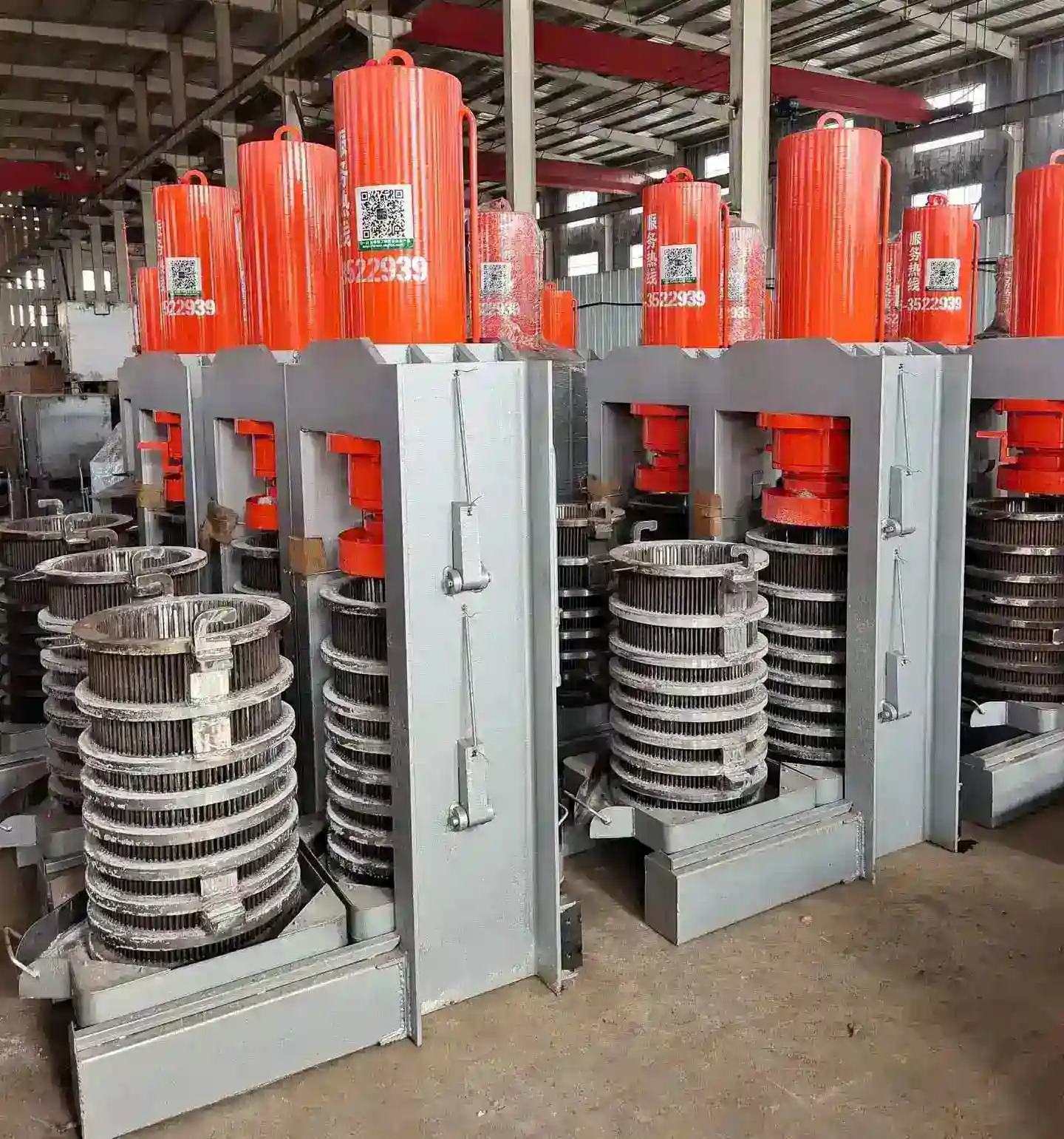
Tea Seed / Camellia Oil Press Machine
Tea seed oil is the most valuable oil we press. Cold-pressed camellia oil sells for premium prices in Japan, Korea, and Europe — used in premium cosmetics and health supplements.
Hot-pressed tea seed oil is a staple cooking oil across southern China and Southeast Asia. Four-step hot press line: roast, crush, steam, press. HN355 to HN500 models available.
- Premium camellia oil — highest value oil in our lineup
- Cold press for cosmetics: Japan tsubaki oil, Korea hair oil
- Hot press for cooking oil: southern China, Southeast Asia
- Four-step process: crusher + roaster + steamer + press
- Rich in oleic acid (80%+) and vitamin E
- HN355 to HN500 models, complete equipment package
- Same equipment does both hot and cold press
Four-Step Hot Press Line
Standard process for tea seed oil production. Complete equipment package available from one factory.
Crusher 220
11KW. 750 kg/h. Breaks hard tea seed shells. Large molecules to small particles.
Roaster 27KW
Thermal oil circulation. Even heat. Develops tea seed aroma. 100–150 kg/batch.
Steamer 60 Type
Q355B steel + 304 SS pot. 100 kg/batch. Softens seed for maximum oil release.
Hydraulic Press
HN355-HN500. 360-620 tons. Low-temperature static pressing. Filter through HN-10SL.
Recommended Equipment Package
| Equipment | Model | Power | Output | Weight |
|---|---|---|---|---|
| Crusher | 220 Type | 11 KW | 750 kg/h | 218 kg |
| Roaster | Thermal Oil | 27+1.1 KW | 100–150 kg/batch | 308 kg |
| Steamer | 60 Type | — | 100 kg/batch | — |
| Hydraulic Press | HN355-HN500 | 3-4 KW | 100-500 kg/day | 2.1-3.9 T |
| Filter Press | HN-10SL | 1.1-2.2 KW | 100-500 L/h | 304 SS |
Cold Press Camellia Oil — The Premium Market
Skip the roasting and steaming. Press raw tea seeds at room temperature. The result: pale golden camellia oil with all natural nutrients intact. This sells for premium prices in Japan (for tsubaki oil skincare), Korea (for hair oil), and Europe (organic cosmetics).
- Rich in oleic acid (80%+) and vitamin E — prized in cosmetics
- Stable at high temperatures — also a premium cooking oil
- Label it "cold-pressed virgin camellia oil" for the luxury market
- Same equipment. Just skip steps 2 and 3 of the hot press line
Frequently Asked Questions About Tea Seed / Camellia Oil Pressing
Is camellia oil the same as tea tree oil?
Completely different products. Tea tree oil (Melaleuca alternifolia) is an essential oil extracted from Australian tea tree leaves, used in cosmetics and medicinal applications. Camellia oil — also called tea seed oil — is a cooking and cosmetic pressed from the fruit of Camellia oleifera trees grown across southern China. It contains over 80% oleic acid (the same fatty acid that makes olive oil valuable) and is widely known as \"Eastern olive oil\" or \"tsubaki oil.\" Our machines press camellia/tea seed oil for edible and cosmetic use.
Why do cosmetic companies pay more for cold-pressed camellia oil?
Cold pressing preserves vitamin E, polyphenols, and squalene that get damaged at high temperatures. Japanese tsubaki oil brands and Korean skincare formulators use cold-pressed camellia oil as a base ingredient — refined cosmetic-grade material can sell for USD 30-50 per kilogram. Hot-pressed camellia cooking oil sells locally for roughly USD 3-5 per kg. Same raw seeds, same press machine, different process: about a 10x price gap between the two outputs.
What equipment do I need for a complete tea seed oil production line?
Full production takes four steps: (1) Crusher (220 type, 7.5KW) to break open hard shells and crush kernels; (2) Roaster (27KW thermal oil, 180-220°C) to dehydrate and develop aroma; (3) Steamer (60 type, Q355B body with 304SS pot) to soften crushed material before final press; (4) Hydraulic press (HN355 or HN426) for extraction. Downstream, add a pneumatic filter press to remove suspended particles. Total connected power runs about 40-50KW; daily output of finished tea seed oil ranges 300-500kg depending on model and shift schedule.
What is the oil yield from tea seeds (camellia)?
Dried tea seeds (whole, with shell) contain roughly 28-35% oil by weight. After shelling, tea seed kernels reach 40-48% oil content. Actual pressed yield depends heavily on variety and harvest timing — fully mature seeds harvested after frost (shuangjiang season in China) give the highest output. The pressed cake residue still holds 5-7% leftover oil; this cake can be sold as organic fertilizer or sent for saponin extraction.
Can the same machine produce both hot-pressed cooking oil and cold-pressed cosmetic oil?
Yes. Many operators run hot-press mode in the morning to supply local restaurants and supermarkets with cooking oil, then switch to cold-press mode in the afternoon using fresh raw seeds to make cosmetic-grade crude oil for export to Japan or Korea. One important detail: flush and clean the barrel thoroughly between product switches so residue from the hot batch doesn't contaminate your premium cold-pressed output — especially important if you're pursuing organic or quality certification.