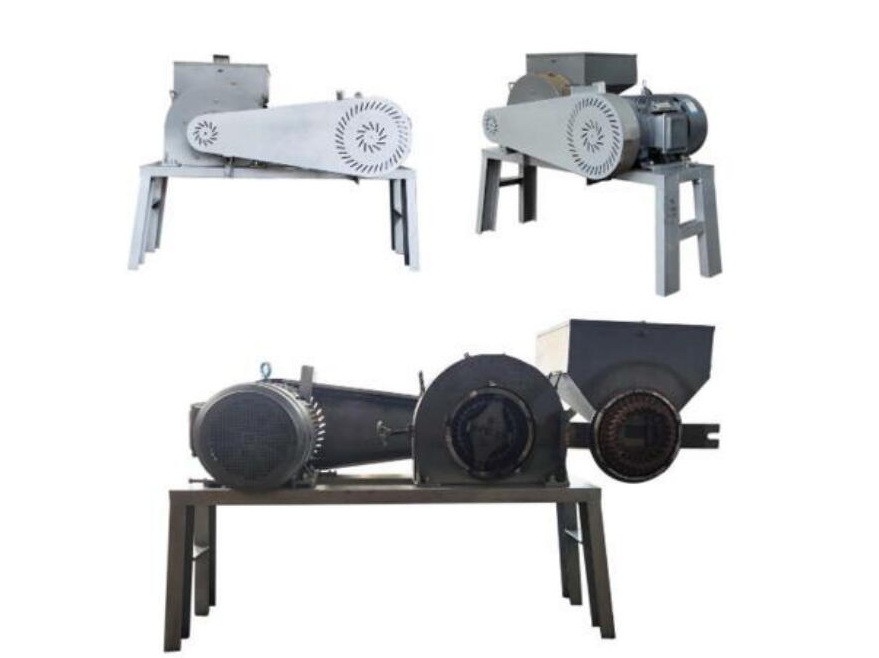
Tea Seed Crusher Machine (220 Type)
This machine uses a flywheel-driven design. Different screen meshes can be swapped in as needed, with the finest capable of crushing to micron-sized particles.
It can crush hard-shell materials such as tea seeds (Camellia oleifera), yellowhorn (Xanthoceras sorbifolium), avocado seeds, and other hard materials with shells.
- Flywheel structure — handles hard shells without jamming
- Interchangeable screen meshes — fine to coarse particle control
- Micron-level crushing capability available
- 1460 RPM rotation speed — fast throughput
- 750 kg/h processing capacity
- Low noise at ~82 dB
- Compact footprint: 1400×802×800 mm
- Ideal first step before roasting or pressing
Specifications
| Parameter | Value |
|---|---|
| Voltage | 380V |
| Power | 11 KW |
| Rotation Speed | 1460 RPM |
| Processing Capacity | 750 kg/h |
| Noise Level | ~82 dB |
| Weight | 218 kg |
| Dimensions | 1400×802×800 mm |
Also Available: 370 Type High-Speed Crusher
For larger-scale operations requiring higher throughput, we also offer the 370 Type model:
220 Type (This Model)
11 KW | 750 kg/h | 1460 RPM | 218 kg
Best for small to medium operations.
370 Type (Upgrade)
18.5 KW | 2000 kg/h | 3260 RPM | 308 kg
2.6x the output. Large-scale operations.
Seed Type & Crusher Configuration Guide
Not all seeds need the same treatment. The screen mesh size and crushing intensity should match your seed type and what comes next in your processing line. Here's our recommended configuration:
| Seed / Material | Recommended Mesh | Output Texture | Next Step | Notes |
|---|---|---|---|---|
| Sesame Seeds | Fine mesh (2–3 mm) | Near-powder, slight grit | Direct to roaster or press | Too fine = oil loss in dust; keep 2mm minimum |
| Groundnut / Peanut | Coarse (5–8 mm) or flaking roll | Half-kernel pieces or flattened | Roast then press | Flaking roll attachment available for even flakes |
| Tea Seed (Camellia oleifera) | Crack + separate (special sieve) | Shell fragments separated from kernels | Kernel roast → cold press | This is the crusher's original design purpose |
| Yellowhorn | Coarse crack (8–10 mm) | Broken shell, intact kernel | Shell separation → kernel press | Hard shell — use 220 type minimum |
| Rapeseed / Mustard | Light crack (3–5 mm) | Slightly broken coat | Roast → cook → press (kachi ghani method) | Don't over-crush or you lose oil to fines |
| Copra (coconut meat) | Coarse shred (10–15 mm) | Irregular strips/flakes | Dry further → VCO press | Wet copra gums up the crusher; dry first below 8% moisture |
| Avocado Seed | Heavy crush (10+ mm) | Coarse chunks | Dry → press or expeller | Very hard; 220 type handles it but blade wear is faster |
| Shea Nut | Medium crack (5–8 mm) | Broken shell + kernel mix | Shell separation → kernel roast | Growing market in West Africa for shea butter production |
How the Flywheel Design Works
This crusher uses a flywheel instead of a direct motor connection for a reason. The answer is about handling hard, irregular materials smoothly. When a tea seed or yellowhorn shell suddenly hits the blades, it creates a momentary resistance spike. A direct-drive motor would jerk, draw excess current, and risk stalling. The flywheel acts as a mechanical buffer — it stores rotational energy during the free-spinning moments and releases it when resistance spikes. The result is steady 1460 RPM operation regardless of what's going through the chamber, lower peak current draw, and longer motor life. It's an older design principle that's still more reliable than modern electronic soft-starters for this kind of load profile.
Maintenance & Care Guide
How often do I need to replace the blades?
For soft seeds (sesame, rapeseed): blades typically last 12–18 months with daily use. For hard shells (tea seed, yellowhorn, shea): expect 4–8 months depending on volume. Signs it's time: crushed output becomes uneven (mix of powder and whole seeds), throughput drops noticeably, or you hear a change in pitch during operation. Keep one spare blade set on hand — they're not expensive and downtime waiting for parts costs more.
The machine is getting noisy. What's wrong?
82 dB is the rated noise level under normal conditions. If it's noticeably louder, check these in order: (1) Blade wear — dull blades create more impact noise as they hammer rather than cut. (2) Bearing condition — the main shaft has two sealed bearings; if one starts failing you'll hear a grinding/rumbling sound that gets worse under load. (3) Loose mounting bolts — vibration amplification from loose floor anchoring. (4) Unbalanced rotor — if you've replaced blades recently, make sure they're evenly tightened in opposing pairs.
What lubrication does it need?
The main shaft bearings are sealed-for-life units — no greasing required. The reducer gearbox needs gear oil (check level monthly through the sight glass, top up with ISO VG220 gear oil if low, full change annually). The motor has sealed bearings. That's it — very low maintenance compared to many industrial crushers.
Frequently Asked Questions — Seed Crusher
Can I crush wet coconut meat (fresh copra)?
Not recommended on this machine. Wet copra is fibrous and gums up the crushing chamber, wrapping around the blades and causing jams. Dry your copra below 8% moisture content before crushing. If you need to process fresh wet coconut, look at our specialized grating equipment instead.
220 type vs 370 type — when should I upgrade?
If you're processing more than 1500 kg/day consistently, the 370 type's higher capacity (2000 kg/h vs 750 kg/h) reduces bottleneck time. Also consider upgrading if your material is particularly hard (shea nuts at scale, large-volume tea seed operations) where the 370 type's heavier rotor handles sustained abuse better.
Does it come with different mesh screens included?
We include two standard mesh sizes with each unit (fine and medium). Additional mesh sizes are available separately and can be swapped in about 15 minutes with basic tools. Most operators settle on one primary mesh for their main crop and only switch when processing a different seed type seasonally.
What's the electrical requirement?
11 KW at 380V three-phase for the 220 type. 18.5 KW at 380V three-phase for the 370 type. Make sure your supply wiring can handle the startup current surge — roughly 2–3x running current for the first 2–3 seconds. A dedicated circuit breaker is strongly recommended.