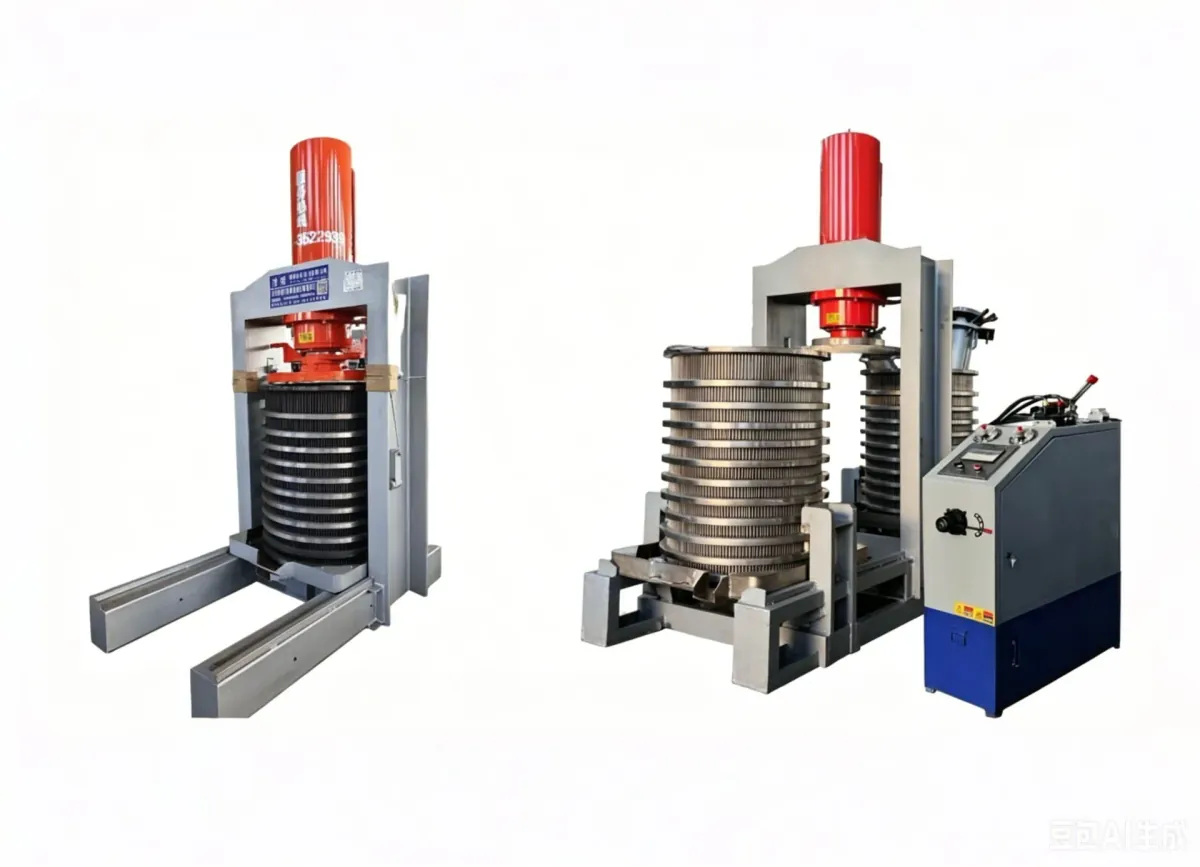
Palm Oil Press Machine
Palm oil runs West African kitchens — and local mills still can't press enough of it. Our hydraulic palm oil press machine takes cracked palm kernels straight from the cracker and boiled palm fruit in small-mill batches. One machine, both products: red palm oil for the cooking-oil market, palm kernel oil for soap and cosmetics buyers.
360-600 tons of force squeezes out what lighter presses leave behind. Kernels give 40-45% oil; boiled fruit batches recover 18-22% oil on bunch weight. The pressed fibre burns as boiler fuel and the kernel cake sells to feed mills — nothing goes to waste.
- 40-45% oil yield from palm kernels
- 18-22% oil recovery from fresh fruit bunches
- Press both red palm oil and palm kernel oil
- HN355 (360T), HN426 (500T), HN480 (600T) models
- Pairs with nut cracker, roaster and filter press
- Ships to Lagos, Port Harcourt, Tema, Abidjan
- Sea freight 25-40 days with full export docs
Production Process
Crack & Boil
Crack palm nuts, separate kernels from shells. For red oil: boil fruit bunches 30-40 minutes, strip and pound.
Cook
Roast kernels at 110-120°C in the thermal roaster. Boiled fruit mash goes in hot — no extra cooking needed.
Press
360-600 tons of hydraulic force. Red palm oil or clear kernel oil flows out of the barrel.
Settle & Filter
Settle overnight, then filter through the HN-10SL. Bottle red oil or kernel oil.
Recommended Models
| Model | Force | Motor | Daily Kernels | Yield | Best If You're... |
|---|---|---|---|---|---|
| HN355 | 360 T | 3 KW | 400-600 kg | 40-44% | Starting out, village production |
| HN426 | 500 T | 4 KW | 480-600 kg | 42-45% | Growing, supplying your city |
| HN480 | 600 T | 4 KW | 500-600 kg | 43-45% | Scaling up, multiple markets |
Real Stories
Nigeria Customer Story
A palm kernel trader near Owerri used to sell raw kernels to a big processor at whatever price was offered that week. In 2024 he installed an HN426 with a cracker and started pressing himself. Kernel oil sells to soap makers at roughly double the margin of raw kernel trading, and the cake goes to a poultry feed mill in the same town. He recovered the equipment cost in about 8 months and now runs two shifts during peak season.
Nothing Wasted
After pressing, palm kernel cake still holds value — feed mills buy it by the ton as protein-rich cattle and poultry feed. The pressed fruit fibre and empty bunches dry out and burn as boiler fuel for the next batch of fruit. In a region where diesel is expensive, that self-supplied heat keeps your daily running cost low.
Best Practices for Palm Oil Pressing
For kernel oil, dry kernels below 8% moisture before pressing — wet kernels trap oil in the cake and spoil faster in storage. Crack cleanly: too much shell mixed in absorbs oil and wears the barrel lining. For red palm oil from fresh fruit, process bunches within 48 hours of harvest because free fatty acid rises fast after picking. Boil bunches 30-40 minutes until the fruit loosens from the spikelets, pound or digest to a mash, and press while still hot for the deepest color and best flow. Let pressed oil settle overnight before filtering — palm oil carries fine fibre that clogs filter cloth if rushed. Kernel cake should come out dry and brittle; if it's soft, cook longer or raise the pressure.
Palm Oil Business in West Africa
Nigeria: Demand Outruns Supply
Nigeria is Africa's largest palm oil market, and domestic demand still exceeds what local mills produce — imports fill the gap every year. The palm belt across Imo, Abia, Akwa Ibom and Edo states is full of small mills pressing for local markets where fresh red oil sells at a premium over imported refined oil. A 500 kg/day kernel line keeps a town supplied and a city distributor calling.
Ghana, Côte d'Ivoire and Beyond
Ghana's central and western regions and Côte d'Ivoire's south are planted wall-to-wall with palms, and smallholder fruit sells to whoever can press it. Kernel oil demand is steadier still: soap and cosmetics factories in Abidjan, Tema and Lagos buy palm kernel oil year-round. We ship regularly to Lagos (Apapa), Port Harcourt, Tema and Abidjan — typically 25-40 days door-to-port with full documentation.
Equipment Selection Guide
A complete palm pressing setup depends on whether you start from kernels, fruit, or both. Here's what a typical line looks like:
- Palm Nut Cracker: Cracks dried palm nuts and separates kernel from shell. Clean kernels press better oil and protect the barrel lining from shell abrasion.
- Roaster (27KW thermal oil): Even, controlled cooking for kernels — 100-150 kg per batch. Temperature control decides both yield and cake quality.
- Hydraulic Press (HN355, HN426, or HN480): 360-600 tons of force. Choose by daily volume: HN355 for village scale (400-600 kg/day), HN426 for city supply (480-600 kg/day), HN480 for regional distribution (500-600 kg/day).
- Filter Press (HN-10SL): Removes fine fibre and solids. Essential for clear bottled red oil. Pair with a settling tank for best results.
FAQ
Can this machine press both palm fruit and palm kernel?
Yes. Boiled and pounded palm fruit goes in for red palm oil in small-mill batches; cracked palm kernels press separately for palm kernel oil. For large fruit lines measured in tons per hour, contact us about pairing with digesters.
How much oil from 100 kg of palm kernels?
About 40-45 liters with hot press, depending on kernel quality and moisture. The remaining 50-55 kg becomes palm kernel cake — sell it to feed mills, don't discard it.
Do you ship to Nigeria, Ghana or Côte d'Ivoire?
Yes. Regular shipments to Lagos (Apapa), Port Harcourt, Tema and Abidjan. FOB or CIF available. Sea freight takes 25-40 days with full export documentation.